If your leather brand is scouting factories for 2027, the first question isn't "what's the unit price" — it's "do we need OEM or ODM?" These two models shape everything from MOQ and lead time to how much control you have over design and how much you'll spend on product development. Below is a real look inside the production line — leather, stitching, edge paint, hardware, and QC standards — so you can decide with confidence.
OEM vs ODM: What They Actually Mean in Leather Manufacturing
OEM (Original Equipment Manufacturer)
The factory produces strictly to your specifications: your tech pack, pattern, dimensions, stitch placement, leather type, and hardware selection. Nothing is pre-decided by the factory. This model suits brands that already have an in-house design team and want full control over every detail to build a distinctive identity.
ODM (Original Design Manufacturer)
The factory already owns finished patterns and design work. You choose from an existing catalog — browse our full product range — and customize small details such as color, embossed logo, or lining. This is ideal for new brands that need to launch fast without investing in pattern development from scratch.
Deep Comparison: Materials, Stitching, Edge Paint, Hardware, Lining, QC
Leather and Materials
Both OEM and ODM can use the same grade of raw materials — full-grain cowhide at 1.2-1.6mm for wallets, or saffiano leather for scratch-resistant textures. The real difference is that OEM lets you specify a particular hide source, farm, or tannery, while ODM factories usually pre-buy leather in bulk lots to control cost. A product like our red leather wallet uses a high-quality vegetable-tanned leather sourced from the factory's standard bulk lot.
Stitching and Edge Paint
Both models typically use single-needle lockstitch at 5-7 stitches per inch with wax-coated polyester thread for moisture resistance. Edges are finished with 3-5 coats of edge paint, alternated with burnishing using a bone folder and CMC gum for a smooth, non-peeling finish. ODM usually offers a standard edge-color formula per existing design, while OEM allows Pantone-matched edge colors — adding 1-2 extra color-testing rounds before mass production.
Hardware and Lining
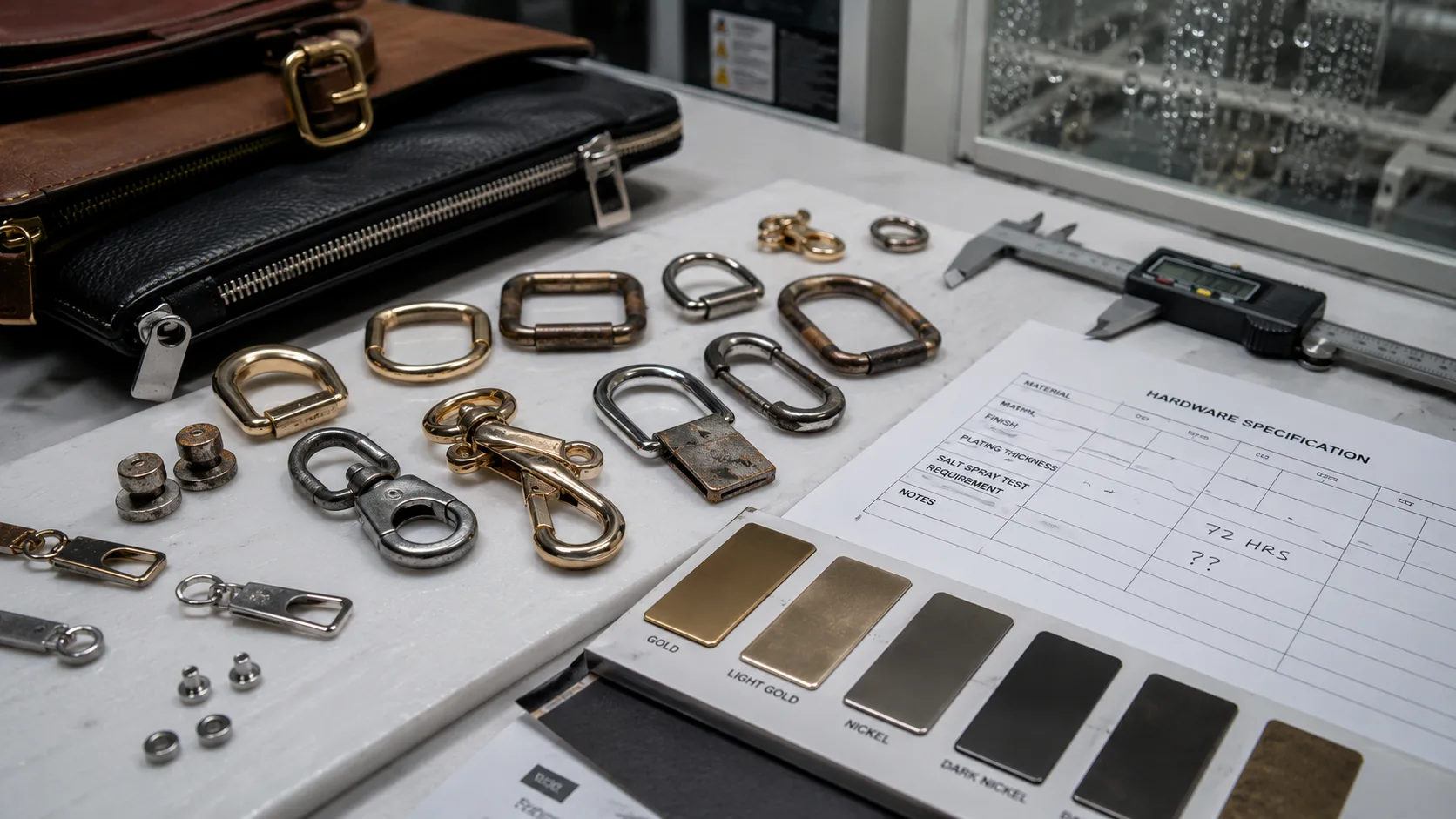
Standard hardware includes YKK zippers, nickel-free brass fittings, and laser-engraved logo studs. ODM typically offers 4-6 pre-approved hardware options, while OEM allows fully custom tooling — though opening a new die adds 15-20 days to the timeline. For lining, microfiber suede or genuine pigskin is preferred over standard fabric lining for durability.
Quality Control (QC)
A qualified factory applies AQL 2.5 sampling with three-point measurement checks — width, height, and stitch-line thickness — plus pull tests on zipper sliders and rivets. Both OEM and ODM should provide a photographed QC report before every shipment to catch common defects like peeling edge paint or uneven stitching.
MOQ and Lead Time: The Real Numbers
For OEM projects requiring a brand-new pattern, MOQ typically starts at 300-500 units per SKU, with total lead time — including 2-3 rounds of sampling — around 45-60 days. ODM, using ready-made patterns such as our bifold leather wallet or leather envelope pouch, has a lower MOQ of 100-200 units per SKU and a shorter 30-35 day lead time, since there's no need to develop and test a new structure.
When to Choose OEM
- You already have a design team and a complete tech pack
- You need a unique design not found anywhere else in the market for long-term differentiation
- Your order volume justifies the higher MOQ and development timeline
- You need control over every detail — logo placement, embossing, Pantone-matched edge color
When to Choose ODM
- You're a new brand that needs to launch fast without an in-house design team
- You want to test the market with smaller orders before scaling up
- You need to keep product development budget low at the start
- You're interested in items like our leather coin pouch or tan leather name card holder, both quick to customize
2026 Trends Shaping the Decision
In 2026, small and mid-sized brands increasingly adopt a hybrid model — launching with ODM to test the market in the first quarter, then moving to OEM once sales stabilize and a distinctive design becomes necessary. Demand for traceable leather and eco-friendlier materials is also rising, pushing factories to provide sourcing certificates for both production models.
Checklist Before Choosing a Manufacturer
- Ask to see real stitching and edge-paint samples, not just catalog photos
- Confirm the true MOQ per color, not just per style
- Verify QC standards and request past AQL reports
- Compare lead times between OEM and ODM for your specific design
- Browse real products in our product catalog and read more case studies on our blog
Conclusion
There's no single right answer between OEM and ODM. What matters is understanding the real production specs — leather, stitching, edge paint, hardware, QC, and lead time — to pick the model that fits your order size, budget, and brand goals for 2026. If you're still unsure, start with an easily customizable ODM product such as our leather envelope wallet before moving toward full OEM development later.